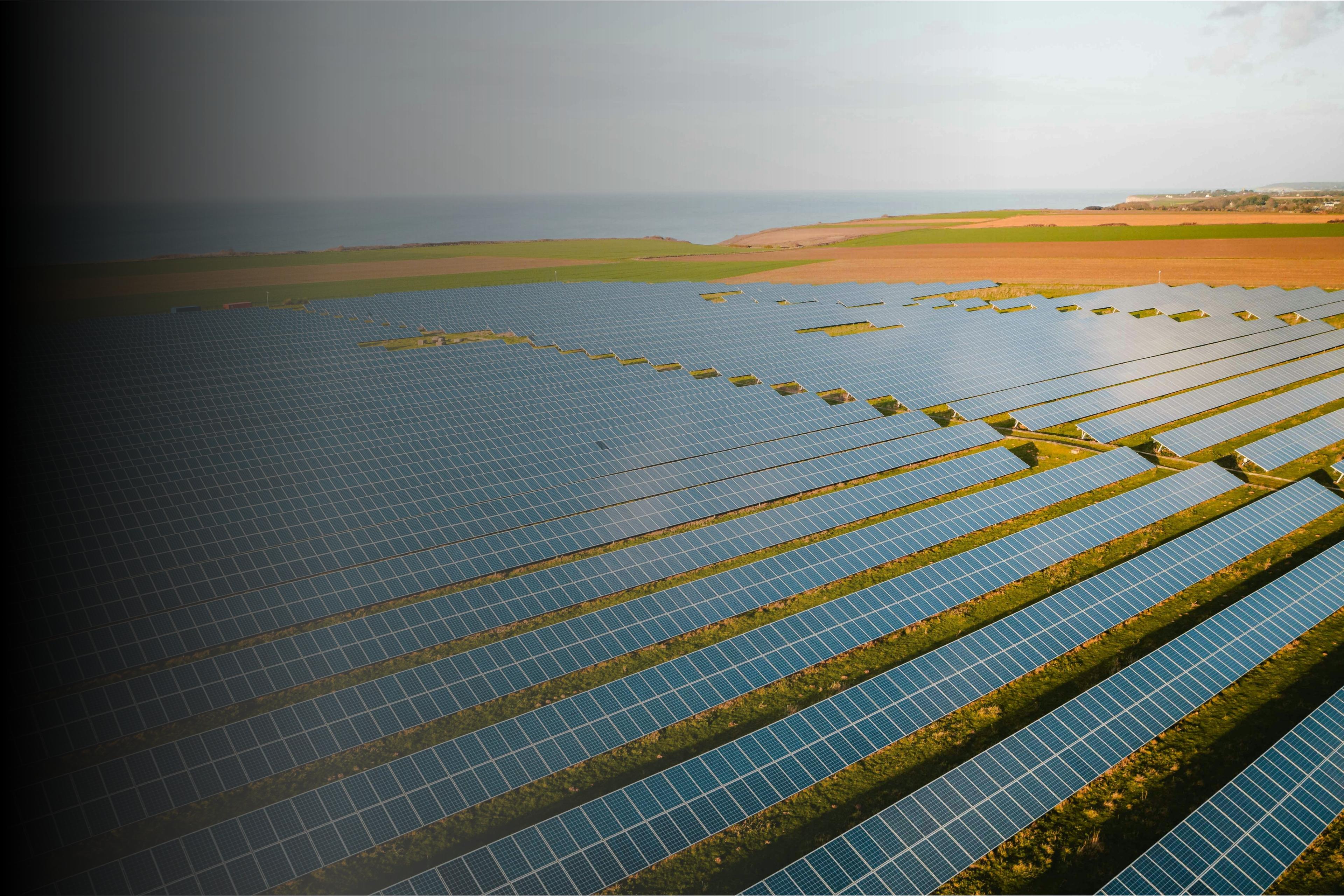
Solar Power Forecasting
For Energy Trading and Grid Management
Meteomatics provides solar power forecasting as a managed service and via our Weather API. Our energy meteorologists build site-specific photovoltaic (PV) forecasting models for your plants, then deliver continuously updated solar power forecasts — global and tilted-surface irradiance, expected generation, and plant output — so trading, dispatch and grid teams can act on what the sun will actually do. As a specialist solar forecasting provider working with 300+ energy companies, we forecast for individual plants, regions, countries and virtual power plants.

Trusted by 300+ Energy Leaders Worldwide


Photovoltaic Forecasting for Grid and Market Optimization
Know when, where and how much solar energy will be fed into the grid. Our utility-scale solar power forecasts cover individual plants, specific regions, entire countries and virtual power plants — so you can optimize day-ahead and intraday trading positions and keep the grid balanced.
- Customized solar generation forecasts for single plants, regions, countries or virtual power plants
- Hyperlocal PV forecasts downscaled to 90 m
- Actionable inputs for intraday and day-ahead energy trading


How Meteomatics Forecasts Solar Power
Solar power forecasting turns high-resolution weather prediction into an expected electricity output for a PV asset. Meteomatics combines high-resolution numerical weather models — including our own EURO1k and US1k — with satellite data and site-specific machine-learning to convert forecast solar irradiance into plant-level generation.
Receive Solar Power Forecasts Directly Via Data Feed
How it works
- Weather layer. We forecast global, direct, diffuse and tilted-surface solar radiation at high spatial resolution, downscaled to 90 m.
- Plant model. During onboarding, our energy meteorologists train a model on your plant's historical production and configuration (orientation, tilt, installed capacity, tracking type).
- Live refinement. Once live, we ingest your plant's real-time data to continuously refine the solar power forecast.
- Delivery. Updated forecasts are delivered every 15 minutes SFTP data feed in your chosen format.
Power production for different aggregation levels (entire farms, regions or countries), flexible output units (kW, Mw, kWh, MWh), temporal resolution up to 15 minutes, forecast update frequency 15 minutes, completely flexible delivery format (CSV, JSON, etc).



Demand Forecasting Manager
Brook Green Supply
Alongside the CWV service, the Meteomatics API is exceptionally accurate and user-friendly. It can be used not only by technical experts but also by data analysts with basic Python programming skills.

Principal Specialist Research and Digitalisation
Swissgrid
A key advantage was the ability to deliver ad-hoc solutions for critical projects very quickly. For one project related to Dynamic Line Rating, this translated into significant cost savings.

Leiter Betrieb Stromnetz
energis-Netzgesellschaft mbH
With Meteomatics’ reliable weather data, we can prepare more effectively, coordinate our actions more precisely, and minimize service disruptions. This enables us to fulfill our role as a grid operator in ensuring a reliable and secure power supply for the region.

DSO Data Science & Development Manager
UK Power Networks
More frequent and higher-spatial granularity weather data has been a game changer for creating probabilistic forecasts, meaning we can retain the same operational resiliency and reliability whilst using our network assets more efficiently.

CEO
LEAG Energy Cubes
Meteomatics is the ideal partner, delivering exceptional data quality and service. We rely on its wind and solar forecasts for over 500 plants (1,100+ MW), enhancing intraday and day-ahead energy management, cutting costs, and optimizing our trading yields.

Senior Operations Research Analyst
BKW
The Meteomatics Weather API is unique in the market as it provides flexible and fast access to a huge amount of weather data in different data formats.

Software Product Manager
Heimdall Power
Leveraging high-quality data from the Meteomatics Weather API, Heimdall Power boosts the transmission capacity of high-voltage power lines by an average of 25%, enhancing both efficiency and reliability in power delivery.
Demand Forecasting Manager
Brook Green Supply
Alongside the CWV service, the Meteomatics API is exceptionally accurate and user-friendly. It can be used not only by technical experts but also by data analysts with basic Python programming skills.
Principal Specialist Research and Digitalisation
Swissgrid
A key advantage was the ability to deliver ad-hoc solutions for critical projects very quickly. For one project related to Dynamic Line Rating, this translated into significant cost savings.
Customer Success Stories
Learn how our weather solutions drive positive impact for our energy customers.










Frequently Asked Questions
Solar power forecasting predicts how much electricity a photovoltaic plant will generate over a future period by converting high-resolution weather forecasts — chiefly solar irradiance — into expected power output. Meteomatics delivers these forecasts at plant, portfolio and country level via API or data feed.
Yes. Powered by our own high-resolution EURO1k (Europe) and US1k (United States) weather models, we provide day-ahead solar forecasts for market bidding and scheduling, and intraday/nowcast forecasts updated every 15 minutes for real-time dispatch and intraday trading. Because EURO1k and US1k run at 1 km native resolution with frequent update cycles, both forecast horizons stay tightly aligned with actual generation across your portfolio.
Yes. We produce aggregated solar generation forecasts for single plants, regions, entire countries and virtual power plants.
Via our Weather API or as a scheduled SFTP data feed, in CSV, JSON or other formats, with output in kW, MW, kWh or MWh.
Both are available, and the right choice depends on your team and use case. Choose the solar power forecasting API if you have in-house data science or engineering resources and want full control — you pull our high-resolution weather parameters (solar irradiance, radiation, tilted-surface radiation and more) and build, tune and run your own PV forecast models. Choose the managed solar power forecasting service if you want accuracy without the overhead — our energy meteorologists train a site-specific model on your plant's historical and live data and deliver ready-to-use forecasts via data feed, so trading, dispatch and grid teams can act on the output directly. As a rule of thumb: the API suits teams that want to own the modelling and integrate solar data into a wider platform; the managed service suits teams that need dependable, plant-tuned forecasts delivered with minimal setup. Many customers combine both — starting with the managed service and using the API for custom analytics.
High-resolution numerical weather models including our own EURO1k and US1k, plus satellite data and 100+ global models and weather sources, downscaled to 90 m.
Explore Our Solutions for the Energy Sector

Energy Solutions
Meteomatics' energy meteorologists provide energy forecasting solutions with outstanding technology for over 200+ energy companies worldwide (energy forecasting B2B): get the most accurate weather data for energy and the best energy production forecasts.

Wind Power Forecasting
Get accurate wind energy predictions, optimize output with real-time and historical wind farm forecasts. Our wind turbine power forecasts enhances energy planning for several energy companies.
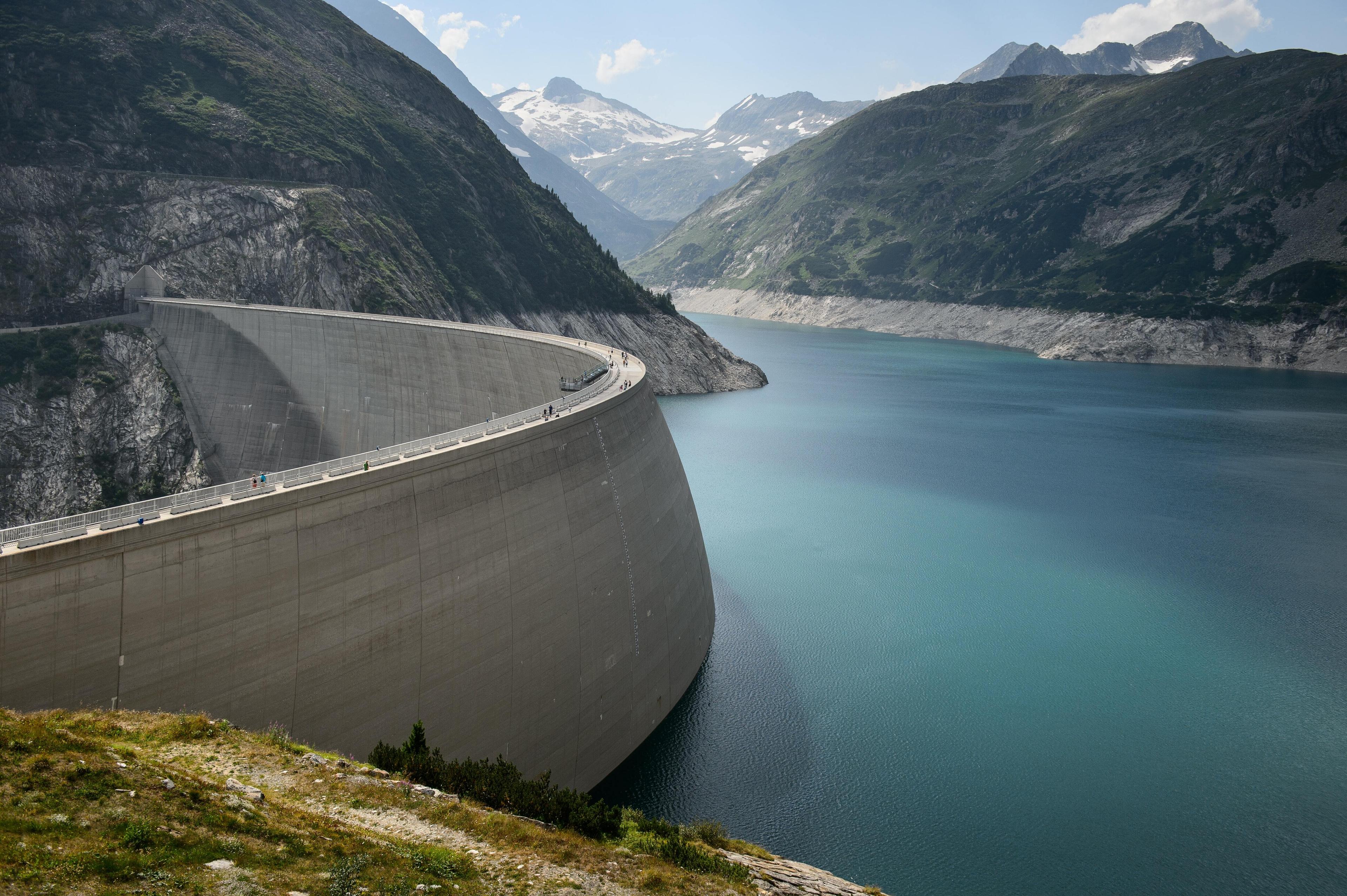
Hydropower Forecasting
Get precise hydropower forecasts with advanced models. Optimize hydroelectric power prediction, water flow forecasting, and reservoir inflow forecasts to enhance generation and efficiency.
Talk to an Expert to Customize Solar Power Forecasts

Talk to an Expert